I thought this was a good explanation of Dungeons and Dragons – also humorous. For some students in our middle school it has become quite popular. Some parents worry it might be too much entertainment and not enough academics for a club. Here is why I promote middle schoolers' new-found love of role-play.
1. I supervise it and include complex math, logic and word puzzles.
2. Role-play allows kids to refine appropriate responses to social situations without the higher stakes of real-world interaction with classmates.
3. Middle school students are developing their identity, and in D&D they get to try on different identities, such as leader or someone who makes mistakes or does bad things.
4. It is an incredible challenge for imagination and creativity. Players invent entire characters and determine how their characters respond to situations. It's great practice for creative writing.
5. Kids come out of their shells and engage with each other.
Every Tuesday afternoon the middle school students go on a 50-minute walking tour of downtown Tacoma. Students have learned about local architecture, offerings at the Karpeles manuscript museum, and the new extension to Sound Transit Link. A few weeks ago they went on a scavenger hunt for a myriad of images that could found within a 4 block radius of the school. The images were picked for aesthetics as well as the need for students to be attentive and have a keen idea of their surroundings while walking around the city. As a group, students found almost all the images; however, Humpty Dumpty and the hand prints remained elusive. If you find yourself downtown and wish to redo the scavenger hunt, I invite you to try this fun activity. The first photo is one of the groups of students part way through their search. The second photo is the items to find. Good luck and Happy Holidays!
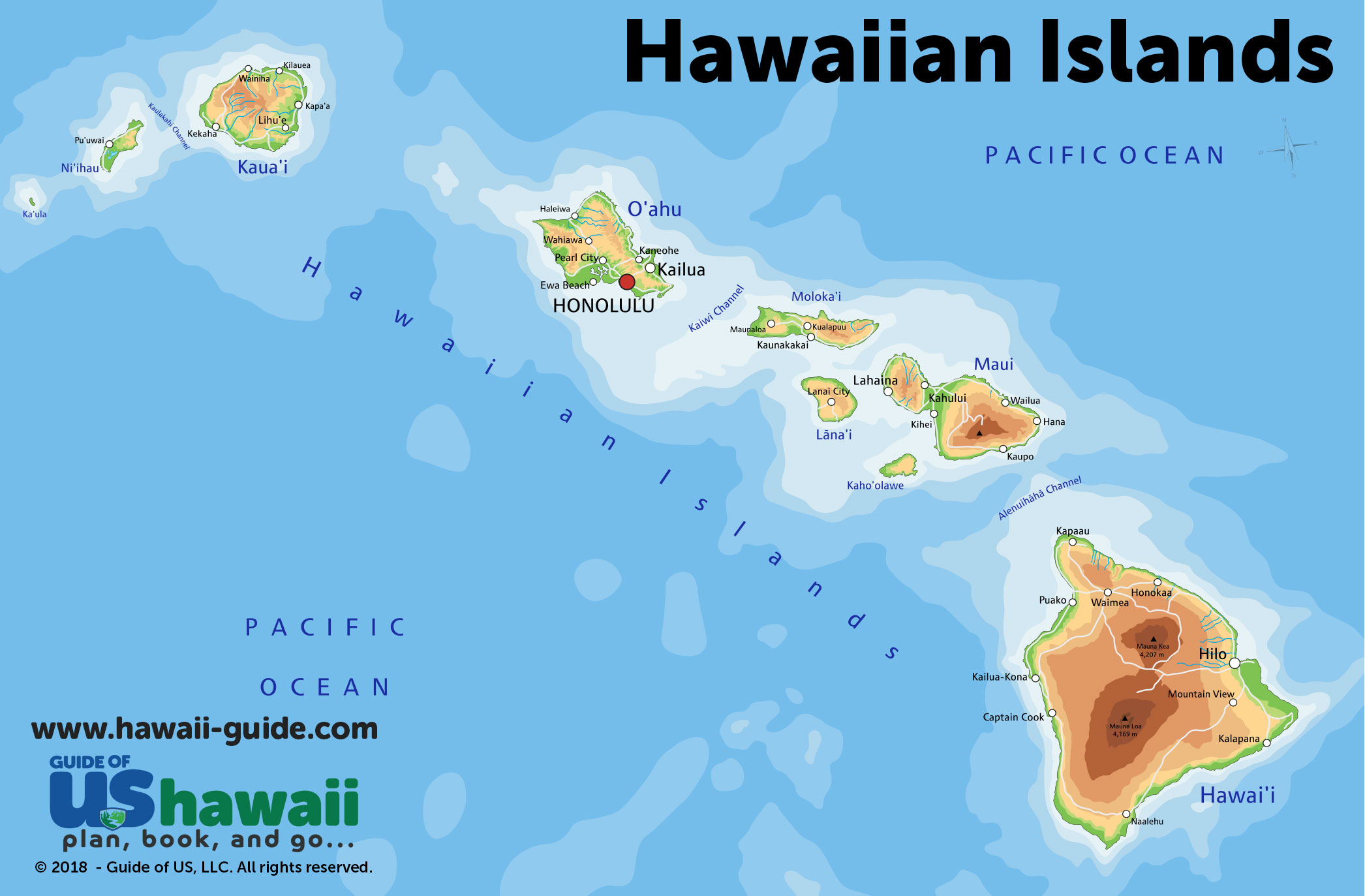
This was the phenomenon that middle school scientists investigated with multiple hands-on science labs these last few weeks. Hawaii is one of the world's newest geological structures, and the science behind its formation and plate tectonics is a recent development, as recently as the 1930s.
Looking at this map and some photos of the islands, some students noticed the line-like formation of the islands and the ascending size of each island compared to the islands to the east and south of it. They also notice the color of rocks and amount of vegetation. What do you notice?
Students also looked into eruption and earthquake data, finding volcanism on Hawaii an anomaly in the middle of the Pacific Plate. We used a digital resource for this.
The students then made a claim based on evidence and reasoning. They advanced their claim with further experiments: one on the movement of plates caused by convection currents and another experiment on how heat forces magma to the surface. These experiments modeled plate tectonics and how Hawaii may have formed.
By the end, students were able to state their claims about how the Hawaiian Islands were formed and the evidence they used to support it. They could predict the date of each island's formation and even the formation of volcanoes on the big island.
This is an inquiry-based model, where students are presented a strange phenomenon, and then through questions and experiments, they gain understanding. This is also how real geologists came to understand plate tectonics and the formation of Hawaii. We hope by understanding this part of geology, students will also understand the formation of Washington geology as well.
Before Thanksgiving break, Algebra1 students created hanging mobiles out of plastic autumn garlands, dowels, and string. Students provided the imagination and creativity for their floral arrangements, and mathematics provided the algorithm for balancing their creations in a hanging mobile.
The algorithm can be observed at children's playgrounds (at least pre-2000) with the simple seesaw. Two evenly weighted children, seated at either end can move and down easily because balance is achieved. However, when one child is much heavier than the other, the seesaw stays tipped to the heavier child's side. There was no balance for the seesaw to go up and down easily. The solution is for the heavier child to move closer to the middle of the seesaw. The explanation can be explained with algebra. In order for the seesaw to balance, the weight of one child multiplied by their distance from the center of the seesaw has to equal the weight of the second child multiplied by their distance from the center. Thus, the greater the weight difference between one child and the other, the less distance from the "fulcrum" the child needed to sit.
This same seesaw principle can be applied to hanging mobiles: the heavier the floral arrangement on one side of the dowel, the closer that arrangement needs to sit from the center (thus where the string holding the dowel is tied). Below are some photos of the project and its results.
Suppose you are in the market for a new car, and the particular one you like is offered in
both gas-only and hybrid models. You are wondering for the hybrid at what specific
number on the odometer does the savings in gasoline purchased offset the additional
amount in the purchase price? I enjoy teaching algebra because this question can be
answered with the knowledge of writing and solving systems of algebraic equations.
Algebra allows one to simplistically model the cost of driving based on the purchase
price (P), the rate of the cost of driving per mile (m), and the variable of miles driven (x).
(Cost = P + mx) Some online research gives you the values for the purchase price,
gas price, and fuel economy (mpg). Graph your two equations, and where they
intersect is the exact mileage point at which operating the two types of car is equal.
Any miles driven beyond this point and the higher-priced hybrid starts saving you money.
Students in my Algebra 1 class conducted this research and solved the systemsof equations written for operating the two models in order to answer the original
question for themselves. Some of them were surprised by the answer.
What do Bluetooth, DNA, and radium have in common? They were all discovered by female scientists.
Students at Seabury middle school this week were inundated with expert speakers and teachers this week. On the second Tuesday of October, Seabury celebrates a special day with the goal of convincing young female students to consider careers in science, technology, engineering, and mathematics (STEM). According to the American Association of University Women women still only make up 28% of the STEM workforce. It is believed that women are systematically steered out of those education tracks.
Ada Lovelace Day has become a holiday to promote women in STEM. Ada has become a figurehead for this movement because she bucked the gender stereotypes of her time and became a skilled mathematician. Some consider her the first computer programmer. At Seabury we celebrate this day by inviting women professionals to take over the day and teach us, do hands-on science with us, and give us advice. All genders enjoy these experiences.
This year we were visited by personal trainer Mandi Marquardt, architect Sonja Barteck, neuropsychologist Dr. Audrey Don, Dr. Jamie Brooks and her associates Brenda and Kayla from Brooks Dental Studio, pediatrician Dr. Diane Bartels, and gifted education specialist Ruth Maitlen.
We learned how to suture a wound, how to make a microscope, how the brain learns, about optical illusions in architecture, all about Ada Lovelace and everything a physical trainer does to keep athletes at peak performance.
The Tacoma Public Library's Summer Reading Program started on June 5th. I suggest you sign your middle schooler up if you live in Tacoma. If not, please check out your library's summer reading program.
A Note about the Selections:
Each reader is different, and not every reader is ready for the content they are able to read. That is the challenge of finding "good fit" books for advanced and gifted readers. These lists are just here to help you (and them) find some new books to read.
At each level, these are not all designed to be “challenge” books. Some are just strong middle-grade/YA fiction that students might enjoy reading or that a particular student may not have read yet. Students are—of course--welcome to seek a challenge on one of the older lists as well or to read a great book they’ve missed from an earlier recommended grade. Parents should advise re: content.
It is also worth noting that a 7th or 8th grader that hasn't read something on the 6th grade list might really love the books listed there. Those aren't only for 6th graders, so scan the whole list and find some things that look good to you.
Also, the CCBC, an amazing children’s library resource out of the University of Wisconsin, has a Web site full of lists. The link above is to their list of recommendations.
I have made three lists: Books for rising 6th and 7th graders, Books for rising 7th and 8th graders Books for rising 8th and 9th graders.
Within the second two lists, I made subcategories with classics on top. Please excuse any duplicates.
•The Westing Game by Ellen Raskin •Rain, Reign by Ann M. Martin •Wonder by R.J. Palacio
• Kira-Kira by Cynthia Kadohata •Half a Chance by Cynthia Lord •Absolutely Almost by Lisa Graff •Words with Wings by Nikki Grimes •Drums, Girls, and Dangerous Pie by Jordan Sonnenblick •Flora and Ulysses by Kate DiCamillo
•Ghost by Jason Reynolds (whole series) •Brown Girl Dreaming by Jacqueline Woodson •Feathers by Jacqueline Woodson •The White House is Burning by Jane Sutcliffe •Paperboy by Vince Vawter •The Call of the Wild by Jack London •Al Capone Does My Shirts by Gennifer Choldenko •Better Nate Than Ever by Tim Federle •Three Times Lucky by Sheila Turnage •Tuck Everlasting by Natalie Babbit •The Scarlet Pimpernel by Emmuska Orczy •Any of the amazing books by L’Engle •Little Women by Alcott •The Once and Future King by T.H. White •Surviving the Applewhites by Stephanie Tolan •Watership Down by Richard Adams •Inherit the Wind by Jerome Lawrence and Robert E. Lee (Not that Robert E. Lee) •Navigating Early by Clare Vanderpool •The Wonderful Wizard of Oz by L. Frank Baum •The Alchemist by Paul Coehlo •Echo by Pam Muñoz Ryan •The Legend of Sleepy Hollow and Other Tales by Washington Irving •The House on Mango Street by Sandra Cisneros •The Adventures of Sherlock Holmes by Sir Arthur Conan Doyle •The Princess Bride by William Goldman
•A Wizard of Earthsea by Ursula LeGuin
•Unsettled by Reem Faruqi
•School for Good and Evil (series) by Soman Chainani
• The Night Diary by Veera Hiranandani
• American as Paneer Pie by Supriya Kelkar
• Ahisma by Supriya Kelkar
• The Henna Wars by Adiba Jaigirdar
• Stand Up, Yumi Chung! by Jessica Kim
• Anything by Erin Entrada Kelly from her many middle grade selections
• Song for a Whale by Lynne Kelly
• Ancestor Approved edited by Cynthia Leitich Smith
• Silver People (poems from working on the Panama Canal) by Margarita Engle
• I Am Not Your Perfect Mexican Daughter by Erika Sánchez
• Lucky Broken Girl by Ruth Behar
•Turtle Boy by M. Evan Wolkenstein
•Elatsoe by Darcie Little Badger
Nonfiction
•The Boy Who Could Harness the Wind (Young Reader's Edition)
•The Miracle Worker by William Gibson
Rising 7th and 8th Graders
Classics: •Gulliver’s Travels •The Iliad •The Odyssey (I prefer the Fagles translation) •Benjamin Franklin’s Autobiography •Mary Shelley’s Frankenstein •Bram Stoker’s Dracula •Charlotte Bronte’s Jane Eyre •Austen’s Emma, Pride and Prejudice, and/or Sense and Sensibility •Charles Dickens: The Old Curiosity Shop •Elizabeth Gaskell’s novels •The Joy Luck Club •Wilkie Collins: The Moonstone (The first mystery novel) •Narrative of the Life of Frederick Douglass: An American Slave •The Hunchback of Notre Dame •P.G. Wodehouse (The Jeeves Stories) •Agatha Christie’s mystery novels •The James Bond novels •John Le Carre’s spy novels
Newer Texts: •The Flavia de Luce series of mystery novels (set in England, involve chemistry) •The Curious Incident of the Dog in the Night-Time •Charles and Emma: The Darwins’ Leap of Faith •The Lone Ranger and Tonto Fistfight in Heaven •Staying Fat for Sarah Byrnes (and other Chris Crutcher novels—he’s from Spokane) •The Fault in Our Stars •Paper Towns •The Book Thief •Aristotle and Dante Discover the Secrets of the Universe •Nick and Nora’s Infinite Playlist (and everything else these co-authors wrote) •Every Day by David Levithan •The Guernsey Literary and Potato Peel Pie Society •The Highest Tide •Life of Pi •The Hitchhiker’s Guide to the Galaxy •The Martian Chronicles •Ship Breaker •Sophie’s World •Bel Canto •The Perks of Being a Wallflower •Box Out •Howl’s Moving Castle •The Rock and the River •Miss Peregrine's Home for Peculiar Children • My Name is Not Easy
• Hearts Unbroken
• The Beast of Cretacea
• Clap when You Land
• Almost American Girl • Hearts Unbroken
• Dear Martin
• City of Beasts
• Orbiting Jupiter
• Darius the Great Is Not Okay
• American Born Chinese
• Love and Other Natural Disasters
• K-Pop Confidential
• Legend and Warcross
• Super Fake Love Song
• The Prince and the Dressmaker
• You Should See Me in a Crown
• This Poison Heart
• They Both Die at the End
• The Poet X
• The Chosen
• Davida's Harp
• The Gilded Ones
• Firekeeper's Daughter
• Give Me Some Truth
• Ayesha Dean - The Istanbul Intrigue
Nonfiction (Check the nonfiction list at the end of the rising 8/rising 9 list, too.) •Port Chicago •I Am Malala •Samurai Rising •Are You Smart Enough to Work at Google?
•The Rainbow Troops
•They Called Us the Enemy
•Everything You Wanted to Know about Indians but Were Afraid to Ask
Rising 8th and 9th Graders (Some of the content contained in these novels is a little edgier, so consider discussing options with parents. These are just great books, not necessarily great books for every student.)
Classics: Theodore Dreiser: Sister Carrie John Steinbeck: The Grapes of Wrath, East of Eden Toni Morrison: Song of Solomon Herman Melville: Moby Dick Ernest Hemingway: For Whom the Bell Tolls Edith Wharton: The House of Mirth The Age of Innocence Henry James: Daisy Miller and various short stories Norman Mailer: The Naked and the Dead James Fenimore Cooper: The Last of the Mohicans (Or the whole set of the Leatherstocking Tales) Richard Wright: Native Son Harriet Beecher Stowe: Uncle Tom’s Cabin Upton Sinclair: The Jungle James Baldwin: Go Tell It on the Mountain Frank Norris: The Octopus Robert Heinlein: Stranger in a Strange Land Alice Walker: The Color Purple Willa Cather: My Antonia Bernard Malamud: The Natural Joseph Heller: Catch-22 Kurt Vonnegut: Cat’s Cradle F. Scott Fitzgerald: The Great Gatsby Dorothy Dunnet’s The Lymond Chronicles (a series) Herodotus’ Histories (460 B.C.) The Peloponnesian Wars by Thucydides (431 B.C.) Don Quixote (1605) Wuthering Heights Charles Dickens: Great Expectations, A Tale of Two Cities Les Miserables Crime and Punishment An American Tragedy The Time Machine Anything by Wilde, especially The Picture of Dorian Gray Dubliners by James Joyce Siddhartha All Quiet on the Western Front The Lord of the Rings One Hundred Years of Solitude
Newish adult fiction and YA reads: The Wide Sargasso Sea The Hate U Give On the Come Up
Elena Ferrante’s Novels Exit West Hard Boiled Wonderland and the End of the World Eva Luna Speak A Confederacy of Dunces The Monkey Wrench Gang The Magicians
Every Day by Leviathan (Series) Interpreter of Maladies (short stories) A Separate Peace The Night Circus How the Garcia Girls Lost their Accents In the time of the Butterflies
Long Way Down
Americanah
House of the Spirits
Purple Hibiscus The Overstory
White Teeth
Cool for the Summer
More than Just a Pretty Face
Ted Chiang's Short Stories
I Love You So Mochi
The Ones We Are Meant to Find
The Summer of Everything
Simon vs. the Homo Sapiens Agenda
Felix Ever After Pet Lost in the Never Woods
Love is a Revolution
Woven in Moonlight
We Set the Dark on Fire
This Is All Your Fault
Nonfiction
Punching the Air The Physics of the Future Plato at the Googleplex Are You Smart Enough to Work at Google? The End of Money Freakonomics The Structure of Scientific Revolutions Mountains Beyond Mountains The Color of Water Kaffir Boy Stamped
One of the hallmarks of the Seabury program is that Seabury students study overarching concepts that can be viewed, analyzed, and researched through the lenses of multiple subjects.
As we work toward the future the students want and studying how to build that future, it is essential that we study the climate emergency and what is and can be done to mitigate greenhouse gasses and adapt to the changing climate.
In order to face this upcoming period of history, the world will need future leaders to have a vast skillset: communication, data analysis, storytelling, logical thinking, historical understanding of policy, mathematical reasoning, and empathy.
As the students construct their understanding of the climate situation, we are encouraging them to notice and note when there are interdisciplinary connections. We are also formally asking them to reflect on these connections in our Friday morning meetings.
Some of their connections from week 1:
Climate weirding is caused by the excess release of greenhouse gases as a result of failed mitigation efforts.
Lack of means to adapt leads to people becoming climate refugees.
Countries that were colonizers also tend to be those that emit more greenhouse gases, which affects current global negotiations and planning.
Some of their connections from week 2:
Sustainable food production benefits future food production, which has a long range economic benefit, which could
Antigens are important in adapting to big changes in the organism.
Weeds adapt to the situation they’re in or the climate or terrain.
We need pollinators to help our flowers produce crops and fruit.
This week, the Seabury middle school students completed a final assessment for our study of Refugees where they connected ideas from our short story unit, their memoirs, economics, and the testimonies we heard from modern day and historical refugees.
In groups, students discussed where to place hexagons labeled with characters, people, places, and terms. Individually, they chose connections and explored and explained them in writing.
Listening to the students discuss connections, explain their thinking to one another, and deciding how to collaborate revealed the creativity of the students' thought processes.
As ideas took shape, each group formed their own connections.
Middle school students at Seabury produced projects that reflected their learning about the forest and the costs and benefits of using it as a resource. Seabury encourages students to think about concepts deeply and to try and understand complex issues. The people of Washington and indeed the US use Washington forests as an important resource, this use benefits not only logging companies and forest owners, but also students learned how sustainable forestry benefits education, animals, and even the forest itself.
The students first engaged in research, they read articles, watched videos, and interviewed a Washington Department of Natural Resources Forester. They then, had to make decisions and think of alternatives for the sale of an imagined timber sale.
When projects and units come to an end, we ask the students to actively reflect on their learning:
What were their goals? What progress did they make toward those goals? Let's look back. . .
What questions did you have when we started? What progress have we made toward answering them?
What new skills have you acquired?
How have you grown as a thinker?
How have you grown as a communicator and collaborator?
What are you proud of?
At the end of the semester, we do a more substantial reflection that usually involves finding specific evidence from a student's work to support their answers to questions like those above.
Historic Times
I recently sent students digital cards with a short video congratulating them on doing something "unprecedented" by finishing a full semester of distance learning.
Immediately thereafter, I realized that we have had periods of distance learning before, like during the polio epidemic:
Chicago schools, for instance, moved to the radio:
"In Chicago, teachers collaborated with principals to create on-air lessons for each grade, with oversight from experts in each subject. Seven local radio stations donated air time. September 13 marked the first day of school.
Local papers printed class schedules each morning. Social studies and science classes were slated for Mondays, Wednesdays and Fridays; Tuesdays, Thursdays and Saturdays were devoted to English and math. The on-air school day began with announcements and gym. Classes were short – just 15 minutes – providing simple, broad questions and assigning homework.
The objective was to be “entertaining yet informative.” Curriculum planners incorporated an engaging commercial broadcasting style into the lessons. Two principals monitored each broadcast, providing feedback to teachers on content, articulation, vocabulary and general performance. When schools reopened, students would submit their work and take tests to show mastery of the material.
Sixteen teachers answered phone calls from parents at the school district’s central office. After the phone bank logged more than 1,000 calls on the first day, they brought five more teachers on board.
News stories reporting on this novel radio school approach were mostly positive, but a few articles hinted at the challenges" (La Monica, Martin).
This is the first time so much technology has been available to help us help the students, so what they have done is still, in many ways, unprecedented.
As such, we asked them to create something more special, more memorable, for their end of semester reflection.
The students had two options: create a museum box representative of their learning this semester or create a Pinterest-style digital board that gathered moments from their learning this year.
Creative Reflection
Reflection in this way allows the students to make a story out of their learning, which is one of the key ways that learning connects to long-term memory. Some of the students shared how much they enjoyed creating their museum boxes, thinking metaphorically about their learning.
The results range in variety and style as broadly as our students do.
We even had a Minecraft reflection. The student who submitted this also submitted a written explanation. The video highlights their creativity.
And some "moments" from the Pinterest boards:
The students will remember and use the skills they have learned during this semester for years to come. They will remember much of the content they have learned, too. The experience of working together through this time, of learning and growing alongside each other, of trusting us to help them learn, of overcoming challenges, of building learning spaces that worked for them--those are memories they will have for a lifetime.
At Seabury, it is important that our students interact with experts in the fields we study. During distance learning, we have been committed to bringing in guest speakers and engaging in virtual field studies that are engaging, enhance our curriculum, and bring our students in touch with experts. We also expose the students to diverse voices and experiences by allowing them to interact with experts with different life experiences than our own.
Last spring, we committed to bringing in a community helper each week, someone who was committed to serving the community during crisis. We had a parent who makes masks, a manager at the Central Co-op, the owner of a local distillery that switched to making hand sanitizer during the days of shortages, an author who did free classroom visits and spoke about the power of stories to help people endure and survive, and a scientist who was working with the city to track the virus in sewage.
This fall, our experts and field studies have been more closely tied to our overarching concept: The Future We Want.
Early on in the year, the students interviewed Professor Ruben Casas about public transportation, the pandemic, and park access. He recently shared that speaking with the Seabury middle school students was one of the most enjoyable moments of his year.
That is a common theme: our students are interested and engaged. They ask meaningful questions, and they set an example for how to be professional and inclusive in public spaces, especially public digital spaces.
Ada Lovelace Day is an annual celebration of women in science, and this year, Mr. MacKenzie arranged an incredible line up of speakers who engaged the students in lectures, hands on learning opportunities, and personal narratives of overcoming bias in their fields.
University of Washington graduate students planned a community lesson on the Hanford Site and graciously allowed all of our students to participate in their lesson. The students learned about issues at the Hanford Site through a variety of lenses and worked toward solutions that took into account many perspectives. In small break out rooms, our students asked questions and offered solutions alongside adult experts.
In early December, we worked with the Newseum, a museum that celebrates the freedom of the press, to learn about identifying bias in news articles to practice identifying bias in headlines and applying a three part system to identifying bias in actual news stories. One of the goals for our middle school students is that they become critical consumers of media and news content. Being able to identify bias is an important part of that process.
Finally, in late December, the students had the opportunity to learn from a Western Washington Stewardship Forester from the Department of Natural Resources who shared concerns of private timber owners and how to maintain healthy forests for environmental and economic benefit. The students used information from his talk to inform their own Timber projects.
We already have several field studies in the works for the coming weeks. During distance learning, these opportunities to reach out to the broader and global community have been an important part of feeling connected to the broader world. We are so proud of our students for their questions, their professional demeanor, and their engagement during these opportunities.
Two eighth grade geometry students spent two weeks studying the blending of math and art in Islamic patterns, which use properties of regular polygons, symmetry, and transformations to create beautiful patterns for contemplation and inner-peace.
Specifically, they studied a famous pattern displaying six-, eight- and twelve-pointed stars, from the 14th-century Córdoba Synagogue in Spain by re-creating it with a 21st century tool: the math app Geogebra. The design begins with the famous “flower of life” motif, a series of overlapping circles whose arcs form a six-pointed petal design that creates a template of vertices for the underlying hexagonal grid.
Once the hexagons begin to appear, then the stars start coming out by connecting the line segments created by the various points of intersection of the circles. Eventually, the Cordoba design begins to show forth.
E.K., after a lot of hard work on his computer, created this design:
One student also created his design on his computer using Geogebra.
Even with the modern tools of computer mouses and software, given the precise and repetitive steps necessary for replicating the Cordoba Synagogue design, the project took a lot of time, increasing the students appreciation for the stunning designs created centuries ago with just the hand tools of compasses and straight edges.
The middle school students are wrapping up an English Language Arts unit on creative nonfiction writing focused on food that paired with a science unit about sustainability. Their final assignment for this unit (informed by their work as young scientists) is to produce an essay that told the story of a meal they planned, cooked, and served. The journey to creating this final essay and the wide array of results speak to how writing at Seabury Middle School is all about developing as a thinker and an artist.
Before We Could Write:
The unit began with Ratatouille, the movie, not the dish. We talked about the idea of being a food critic and did a close reading of Anton Ego's speech:
In many ways, the work of a critic is easy. We risk very little yet enjoy a position over those who offer up their work and their selves to our judgment. We thrive on negative criticism, which is fun to write and to read. But the bitter truth we critics must face is that, in the grand scheme of things, the average piece of junk is more meaningful than our criticism designating it so. But there are times when a critic truly risks something, and that is in the discovery and defense of the new.
Last night, I experienced something new, an extraordinary meal from a singularly unexpected source. To say that both the meal and its maker have challenged my preconceptions is a gross understatement. They have rocked me to my core.
In the past, I have made no secret of my disdain for Chef Gusteau's famous motto: Anyone can cook. But I realize that only now do I truly understand what he meant.Not everyone can become a great artist, but a great artist can come from anywhere. It is difficult to imagine more humble origins than those of the genius now cooking at Gusteau's, who is, in this critic's opinion, nothing less than the finest chef in France. I will be returning to Gusteau's soon, hungry for more.
The students began to think about making food and describing or critiquing food as parallel art forms. Students asked questions. They shared understandings.
Reading as Writers:
Before students wrote their first creative nonfiction essay, they read models of food writing.
They shared favorite sentences from these model texts:
"This isn’t a dish you’ll find in a Pakistani restaurant—it’s that special, simple meal you make at home for your loved ones—and it doesn’t even have a name" (Saadat, "The Homestyle Pakistani Curry You Won't Find On Restaurant Menus").
and
"But this is not a food story that comes without cost" (Twitty, "I Had Never Eaten in Ghana Before. But My Ancestors Had").
Our reading discussions focused on what made the examples they read work or speak to them. Some of the students had had practice reading as writers in years past. Some were new to thinking about what they read in this way. They pushed each other to think in new ways or recognize new ways of thinking.
Together, we built rubrics. What does a successful piece of food writing look like? The morning and afternoon ELA classes came up with similar, but distinct rubrics:
The students' first pieces matched the prompt or subject of their model texts. Then, they bravely shared their writing with small groups of classmates. Someone who did not write the piece read it out loud, and then the students in the group asked questions. As a reader, what did they want to know? What questions did they have that would help them better understand? They also highlighted portions of each piece that were working really well.
And then Again:
Students then began a second round of reading, discussing, writing, and workshopping. The model texts were a bit more personal, a bit more about a story having a message:
Some stand-out sentences from this crop of model texts:
“The telltale brick-shaped carton encasing a Dayglo orange matter that
provided equal parts sustenance and humiliation: government cheese” (Dempsey, "The Tyranny and the Comfort of Government Cheese").
and
"Anh and I were transfixed by the bright red cylinder and the mustache grin on Mr. Pringles’s broad, pale face. The Heidenga girl pried off the top and crammed a handful of chips into her mouth. We watched the crumbs fall from her fingers to the floor" (Nguyen, "Pringles").
Even their choice of favorite sentences reveals their growth as writers.
This chance to embrace more personal narratives and put more of themselves into their stories gave some of the students a necessary push from descriptive writing into narrative writing. The students opened windows into who they are and how food connects them to their world.
Revision:
Students chose one of these first two pieces to revise. I gave them detailed feedback as a reader and as a teacher. The crafted more compelling sentences, they reorganized, they shifted tense and perspective, and then they hit "submit."
Here are some anonymous highlights from their works of art:
"Grilled cheese. It’s one of the only foods I can make without burning something or nearly exploding the microwave because I forgot I left a fork in it."
and
"Bread is cool because it tastes like bread. It's also made out of a brown grass called wheat (or even rye), so that's pretty great. Bread is also usually brown. If you bake your bread on flour or with a light dusting on top, it might look more appetizing to some people. Perhaps you could call it artisan."
and
"Either way, it will probably not be like how my abuela used to make it, but some will do anything for that taste of home."
Meanwhile:
Meanwhile, the students were researching sustainable food production in science. They prepared meal plans and ingredients lists. They worked with Mr. MacKenzie to design a meal.
We also looked at food photography, discussed aesthetic preferences, and learned some food styling tips. The students practiced taking and editing pictures of food.
A Chance to Hone a Skill:
The chance to practice writing about food again after having finished the workshopping process and thinking so deeply about the food they eat and where it comes from allowed the students to stretch and grow. They could be more creative because they were more comfortable with the genre. Through meetings with me and, in some cases, each other, they talked through and planned their final pieces. They wrote and revised and wrote some more.
These final essays have voice and power. They tell stories that convince. They draw on evidence and research to tie food to its origins while also crafting character.
Great Artists:
No one sits down at the piano the first time and plays like a maestro.
I think often about the first four minutes of this video when I think about teaching students to write in any new genre. Their first attempts, those ones that are more likely to plod along, are so important. They are foundational. Young writers need to hear that they are plodding along and also those moments when their writing flows, when jokes they wrote land, when their voices shine. They also need to read successful examples just like a young musician needs to listen to music. Then, they can improve. Becoming an artist takes work and it takes low stakes opportunities to just be okay, to hit some missed notes.
Bravery
It is brave to put yourself on the page. It is brave to try something new. It is brave to ask someone else to look at something you have created and make it better.
This is the work of being a Seabury student and the work of being an artist.
The Last Word:
Anonymous Excerpts from the Sustainable Cuisine Essays:
"My hands were lightning fast, whizzing back and forth. It was a blur of motion as I grabbed the tomato and threw it in the air. I grabbed a knife and chopped it before it hit the ground, Kung-fu style.2 It was a little less dramatic, but who cares. I slapped the potatoes down and vigorously stabbed them with a fork3. I wrapped them in a towel and put them in the microwave. Despite my efforts, there was no nuclear explosion, phew."
"When I think of fall and winter, I think of potatoes: those round and imperfect roots. But add some butter, maybe cream, salt, pepper, and a masher, and you have one of the most imperfect perfect things in the world."
"There were bubbles everywhere. It had exploded to the top of the mason jar with all of the little yeast working.
One last day of being outside. One big feeding. Being in the fridge would will slow him down and not eat as fast. I took a few cautious sniffs. And made my lemon face.
This was ready."
I think you'll agree: these student writers are artists.